Behind every high-purity research peptide is a carefully controlled manufacturing process designed to deliver precise sequences with consistent quality. Understanding how these compounds move from a designed amino acid sequence to a sealed, lyophilized vial helps researchers evaluate the reliability of their materials and the standards behind them.
The Foundation: Solid-Phase Peptide Synthesis (SPPS)
Most modern research peptides are produced using Fmoc solid-phase peptide synthesis (SPPS), the current industry standard for laboratory-scale and research-grade material. In this method, the peptide chain is built step-by-step while anchored to a solid resin support.
Key advantages of Fmoc SPPS include:
- High sequence precision through sequential addition of protected amino acids
- Milder chemical conditions compared to older methods
- Compatibility with automation for improved consistency
- Ability to produce a wide range of peptide lengths and modifications
Each cycle involves selective deprotection of the growing chain, coupling of the next amino acid, and thorough washing to remove excess reagents. Automated synthesizers with real-time monitoring help maintain accuracy across these repetitive steps.
Purification: Achieving Research-Grade Purity
After the full sequence is assembled, the peptide is cleaved from the resin and the side-chain protecting groups are removed. The crude product then undergoes purification, most commonly by preparative high-performance liquid chromatography (HPLC).
HPLC separates the target peptide from truncated sequences, deletion products, and other process-related impurities. The goal is to reach the specified purity level — typically ≥98% to ≥99.5% for high-quality research material — before the compound moves to the final stage.
Analytical Verification
Purified material is subjected to rigorous testing, including:
- Analytical HPLC to confirm purity
- Mass spectrometry to verify molecular identity and exact mass
- Additional checks such as endotoxin testing and, when requested, further structural confirmation
Only batches that meet predetermined specifications proceed to the next step.
Controlled Lyophilization and Final Packaging
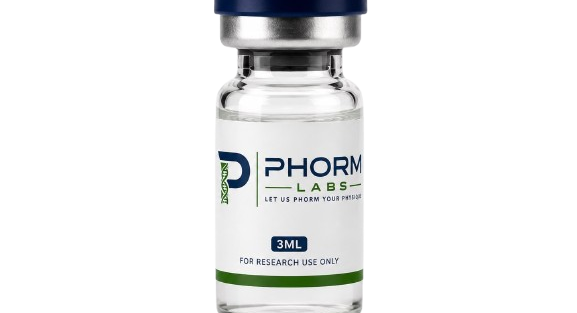
The purified peptide solution is freeze-dried under carefully controlled conditions to produce a stable lyophilized powder. This dry form is then sealed in sterile glass vials, labeled with unique lot numbers, and accompanied by a batch-specific Certificate of Analysis.
Controlled lyophilization is critical: it removes residual solvents and water while helping preserve the structural integrity of the peptide for long-term storage when handled correctly.
Why Process Control Matters for Researchers
Small variations in synthesis, purification, or drying conditions can affect purity, solubility, and stability. A well-documented, multi-stage process — from automated Fmoc SPPS through independent analytical verification — reduces variability and supports more reproducible laboratory results.
At Phorm Labs, every research peptide follows this integrated pathway: precision synthesis, HPLC purification, comprehensive third-party testing, and controlled lyophilization. The result is material designed to meet the demands of qualified research professionals who require both high purity and full traceability.
Supporting Your Next Project
Whether you are working with standard sequences or exploring custom requirements, the quality of the underlying manufacturing process directly influences the reliability of your experimental materials.
Explore the Phorm Labs catalog to view available research peptides, each produced under controlled conditions and backed by batch-specific documentation. All products are supplied strictly for qualified laboratory research and analytical applications.
Precision from sequence to sealed vial. Research with confidence.
This content is provided for educational purposes regarding research peptide production. All Phorm Labs products are for research use only and are not intended for human consumption, diagnostic, or therapeutic use.