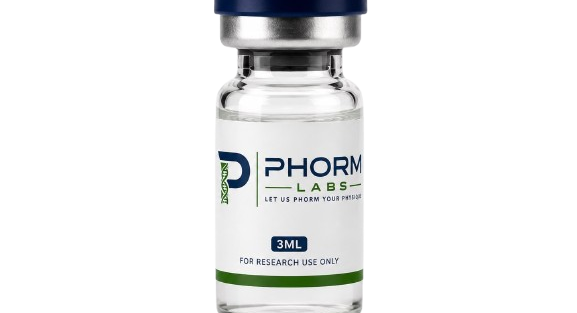
High-purity research peptides arrive in lyophilized (freeze-dried) form for a reason: this state offers the greatest long-term stability. However, even the highest-quality peptide can lose integrity if storage and handling conditions are not carefully controlled. For laboratory researchers, proper practices from the moment a vial arrives until it is reconstituted are essential for maintaining compound reliability and supporting reproducible experimental results.
Why Lyophilized Peptides Are Preferred for Research
Lyophilization removes water under controlled conditions, leaving a stable dry powder sealed in a sterile vial. In this form, most research peptides remain stable for extended periods when protected from heat, moisture, light, and oxygen. Once water is reintroduced during reconstitution, chemical degradation pathways (oxidation, hydrolysis, deamidation, aggregation) become more active, significantly shortening practical working life.
Recommended Storage for Lyophilized Peptides
- Long-term storage: –20 °C or colder (–80 °C is ideal for highly sensitive sequences or archival material).
- Short-to-medium term: 2–8 °C is acceptable for peptides that will be used relatively soon.
- Keep vials tightly sealed in their original containers.
- Protect from light (store in the original box or wrap in foil if needed).
- Minimize exposure to humidity.
Before opening a cold vial, allow it to reach room temperature inside a desiccator or sealed container. Opening a cold vial in ambient air can cause moisture to condense on the powder, accelerating degradation.
Best Practices for Reconstitution in the Laboratory
When ready to prepare a working solution:
- Use aseptic technique and sterile laboratory equipment.
- Select an appropriate diluent based on the peptide’s solubility characteristics and the planned experimental conditions (sterile water, bacteriostatic water, or other research-grade solvents as required).
- Add the solvent slowly down the inner wall of the vial rather than directly onto the lyophilized cake.
- Gently swirl or roll the vial to dissolve the peptide. Avoid vigorous shaking or vortexing, which can cause foaming or aggregation.
- Record the concentration, date of reconstitution, and lot number immediately.
Handling Reconstituted Solutions
Once in solution, peptides are less stable. Standard laboratory guidance includes:
- Store reconstituted solutions at 2–8 °C.
- Aliquot into single-use or limited-use volumes to avoid repeated freeze-thaw cycles.
- Protect from light.
- Use within a limited timeframe appropriate to the specific peptide and diluent (often days to a few weeks under refrigeration).
Repeated freeze-thaw cycles are a major source of degradation and should be minimized or eliminated through proper aliquoting.
How Phorm Labs Supports Stability from Production Onward
At Phorm Labs, every research peptide undergoes controlled lyophilization after purification. This process, combined with high HPLC purity (≥98–99.5%+), mass spectrometry identity confirmation, and low endotoxin levels, is designed to deliver material with strong inherent stability when handled correctly. Each vial is sealed under conditions that support long-term integrity when stored as recommended, and every batch is accompanied by a full Certificate of Analysis for complete traceability.
Supporting Reliable Laboratory Work
Consistent experimental outcomes depend on both the quality of the starting material and the care taken in its subsequent handling. By following established storage and reconstitution practices, researchers help preserve the integrity of high-purity peptides from the moment they arrive in the lab.
Explore the Phorm Labs catalog for research peptides produced with precision synthesis, rigorous third-party testing, and controlled lyophilization. All products are supplied strictly for qualified laboratory research and analytical applications.
Protect the quality you research with. Handle every vial with care.
This content is provided for educational purposes regarding laboratory research practices. All Phorm Labs products are for research use only and are not intended for human consumption, diagnostic, or therapeutic use.